How 4-3-3 Really Works: Follow One Attack
Follow the goalkeeper, pivot, two eights and front three through an illustrative attack, and see why cover matters when the ball is lost.
Introduction
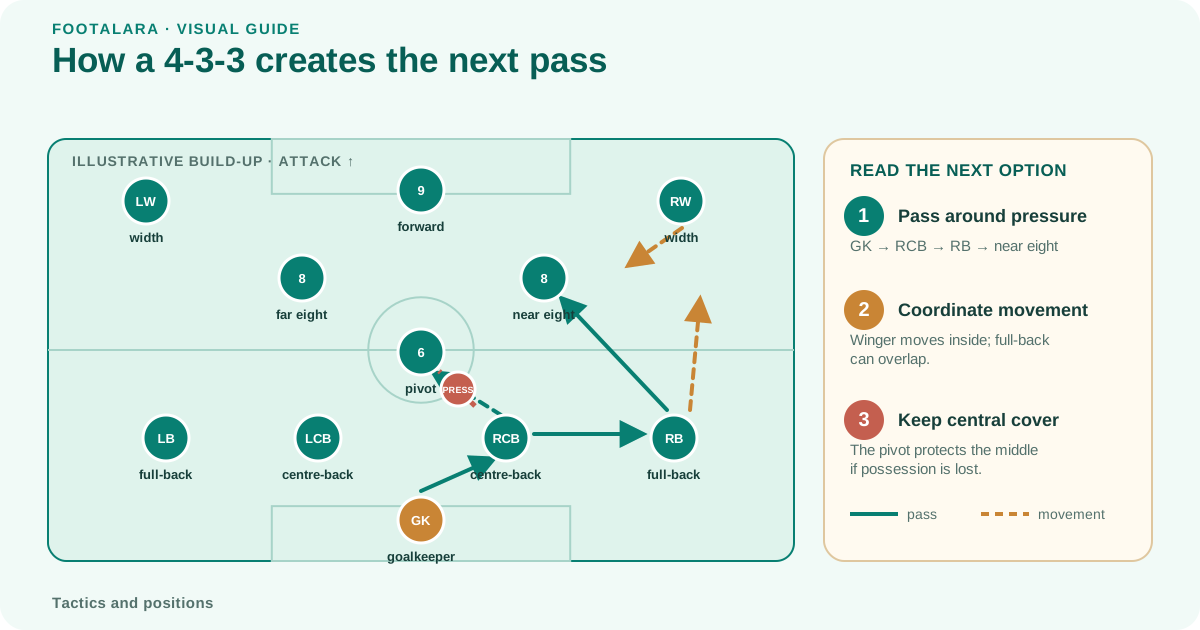
Draw four defenders, then one deeper midfielder with two midfielders ahead, then three forwards. Add the goalkeeper behind them. This familiar version of a 4-3-3 creates useful triangles, but the triangles work only if players move to make a pass possible. Follow one illustrative attack to see the decisions hidden by a static team sheet.
Name the midfield jobs
The six and the two eights
The deepest midfielder is often called the six or pivot; the two more advanced midfielders are often called eights. These are role labels, not a demand that the players wear those shirt numbers. The pivot can support circulation and protect the centre, while the eights connect play farther forward.
Imagine the right centre-back with the ball. If the pivot stands directly behind an opponent, the pass may be blocked despite looking short on a diagram. Moving a few steps to change the angle can matter more than standing in the theoretically correct circle.
Play through pressure or around it
An example from a coaching session
Rehanne Skinner's FIFA session uses a 4-3-3 in its full-pitch work. It asks players to recognise pressure, use the goalkeeper and offer passing options through central and wide areas. The exercise is a concrete example of coaching the decisions within a shape.
Our illustrative sequence begins with goalkeeper to right centre-back. If an opponent closes the central lane, the right-back offers an outside pass. The near eight can then show at an angle beyond that opponent. If the opposition instead blocks the outside route, the pivot becomes the alternative. Neither pass is compulsory: the opponent's movement determines the choice.
Sources: FIFA Training Centre — Rehanne Skinner: Using the goalkeeper for successful build-up
Give width to someone
A winger and full-back should read each other
If the right winger stays near the touchline, the right-back need not occupy the same lane at the same height. He might support behind or move inside. If the winger travels inward, an overlapping full-back can offer width. An overlap goes outside a teammate; an underlap goes inside.
FIFA's 2025 Chelsea analysis illustrates the central option through an inverted full-back. This example describes one team; other versions of a 4-3-3 can use different movements. When watching another team, identify the player supplying width before deciding that an inward-moving winger has abandoned his position.
Sources: FIFA Training Centre — Chelsea: The inverted full-back and central overloads, 2025
Finish the attack and protect the next one
Look away from the ball
As the ball reaches a wide attacking area in our example, the striker can occupy the centre-backs, the far winger can threaten the far side and one eight can arrive from behind. Pause before adding the other eight and both full-backs to the box: who could delay a counterattack if the cross is cleared?
After losing the ball, the nearest player may pressure the receiver while others protect central routes or recover. FIFA's analysis of defensive organisation highlights compactness and control of central space. A side that settles with its wingers deeper may look like a 4-1-4-1; that does not mean the original 4-3-3 description was useless.
Sources: FIFA Training Centre — Team organisation out of possession
Let the press choose the route
A 4-3-3 decision tree against two forwards and wing-backs
This is an illustrative sequence, not an account of an actual match. A left centre-back receives while two opposing forwards screen the pivot and curve their runs towards the full-backs. The tempting short pass to the left-back would send the ball towards a waiting wing-back and the touchline, where escape routes shrink. FIFA's Jens Lehmann session addresses that exact structural problem for a 4-3-3 facing a 5-3-2: it recommends central progress or finding the attacking midfielders first when opposing wing-backs can lock onto the full-backs aggressively.
The centre-back carries forward just far enough to attract one striker. The near eight starts high, then drops diagonally into the space the striker has left; the far eight remains beyond the opposing midfield rather than copying the same movement. If the central midfielder follows the dropping eight, the pivot may become free. If nobody steps out, the centre-back can pass to the eight between lines. The route comes from the defenders' reactions. A rehearsed pattern supplies options, while observation selects among them.
- Opponent locks onto the full-back: look inside before accepting the trap.
- Opponent follows the dropping eight: recheck the pivot or the space behind.
- One flank becomes crowded: keep the option to recycle and switch.
Sources: FIFA Training Centre — Attacking in a 4-3-3 against a 5-3-2
Audit support in three distances
Near help, an escape pass and cover for the loss
When a player receives, identify three teammates rather than admiring the triangle drawn on paper. The nearest support should be reachable under the receiver's likely pressure. A second option should let the team leave the crowded area, often backwards or across the pitch. A third player should occupy a position that can protect a dangerous route if the pass or first touch fails. Those jobs can overlap, but assigning all three to one player can hide a large gap.
Continue the illustrative move above. The near eight receives facing his own goal. The centre-back offers the safe return, the pivot changes angle to offer an inside connection, and the far centre-back stays available for a switch. If the eight turns and attacks, the pivot should judge whether to advance in support or hold the centre. Advancing can add a forward receiver; holding can slow a counterattack. The better decision depends on pressure, teammate positions and the opponents left goal-side, not on the 4-3-3 label alone.
Sources: FIFA Training Centre — Attacking in a 4-3-3 against a 5-3-2
Make pressure and cover one decision
The first defender's action changes everyone else's job
Assume an opponent intercepts the forward pass near the right touchline. If the right winger can arrive while the receiver is still controlling the ball, pressing may prevent an immediate switch. The near eight can then protect the pass inside, while the pivot holds a position between the ball and the centre-forward. If the winger arrives late and cannot affect the ball, sprinting past the play would remove the first layer without delaying the attack; recovery towards a compact block may be the sounder choice.
FIFA's defending-principles session makes the collective link explicit: the front three press in coordination, the nearest midfielder moves across if an opponent breaks that line, and the far midfielder tucks in. Use a two-part verdict when reviewing a turnover: state whether the first player should press or recover, then name the pass a teammate must cover. 'Press' without a covered route is only an action word. The tactical answer explains how two or three players make the action safe enough to attempt.
Sources: FIFA Training Centre — Michael Johnson: Defending principles for individuals and small groups
Quick comparison
| Concept | Useful for | Watch for |
|---|---|---|
| Pivot | Connecting the first pass and protecting the centre | Can be screened by an opponent |
| Near eight | An angled pass beyond pressure | Must not hide in the same blocked lane |
| Winger/full-back pair | Sharing width and inside space | Both advancing changes the cover required |
Trace two options from the same first pass
- Start with goalkeeper to right centre-back.
- Block the pivot with an imaginary opponent and draw the wide route.
- Move that opponent towards the full-back and find the central route.
- After a turnover, circle the players able to defend the middle immediately.
Practical checklist
- Locate the pivot
- Check the passing angle
- Identify who supplies width
- Find the cover behind the attack
Test your understanding
Try each question before opening the answer. Use the explanation to check your reasoning.
A 5-3-2 press blocks the 4-3-3 pivot and its wing-back is ready to jump onto the full-back. Which first option best fits the worked decision tree?
Show answer and explanation
Use the centre-back to attract pressure and look for an eight arriving from a higher starting position.
The direct full-back pass accepts the opponent's wide trap. The central option tests whether a striker or midfielder will leave another receiver free.
After a turnover, the nearest winger is too far away to affect the receiver's first action. Should the winger always continue pressing?
Show answer and explanation
No. Recovering into the team shape may be better if the press cannot delay or direct the ball.
A useful press needs support and covered routes. Arriving alone and late can open the lane behind the winger without slowing the counterattack.
Frequently asked questions
Does 4-3-3 require a false nine?
No. A centre-forward can hold a high position, run behind or drop to connect play. The formation alone does not select one of those jobs.
Conclusion
A working 4-3-3 gives the ball carrier options and gives the team cover. Follow the pivot, width provider and nearest support player to understand how those two needs are balanced.
Sources
- FIFA Training Centre — Rehanne Skinner: Using the goalkeeper for successful build-up
- FIFA Training Centre — Chelsea: The inverted full-back and central overloads, 2025
- FIFA Training Centre — Team organisation out of possession
- FIFA Training Centre — Attacking in a 4-3-3 against a 5-3-2
- FIFA Training Centre — Michael Johnson: Defending principles for individuals and small groups